Niche Is the New Mainstream: The Beautiful Chaos of Hyper-Specific Fandoms
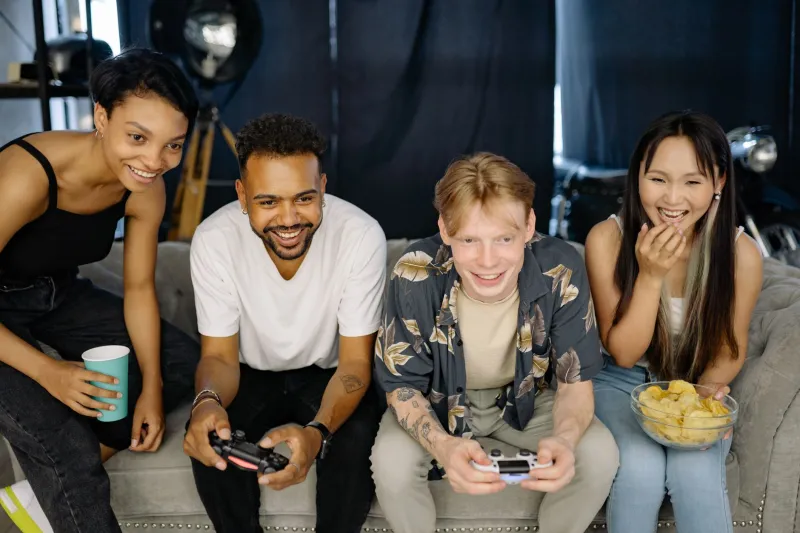
Somewhere on Discord right now, there's a server with 12,000 members dedicated entirely to a single indie strategy game that peaked at 8,000 concurrent players on Steam. They have their own inside jokes, fan art, lore debates, and annual virtual events. They have a community. And to an outsider, the whole thing might look bizarre. But to anyone who's ever found their people around something deeply specific and slightly obscure, it makes perfect sense.
This is the era of the hyper-specific fandom, and it's reshaping how we think about culture, community, and what it even means to be a fan.
When 'Niche' Stopped Being an Insult
For most of the 20th century, mainstream was the goal. You wanted to like things that lots of people liked, because shared cultural touchstones were how you connected with the world around you. Loving a band nobody had heard of was cool in a certain indie-credibility way, but it also meant you were largely alone in that love.
The internet changed the math entirely. Suddenly, the size of the potential audience became effectively unlimited. If one in ten thousand people shares your very specific interest, that's still 33,000 people in the US alone. Find them, and you don't have a niche — you have a community.
Platforms like Reddit, Discord, Tumblr, and TikTok didn't just enable niche fandoms. They accelerated them. The algorithm doesn't care if something is mainstream. It cares if it's engaging. And nothing is more engaging than content made specifically for people who already care deeply.
The Psychology of Loving Something Nobody Else Loves
There's something almost counterintuitively powerful about being a fan of something obscure. Psychologists who study identity and group belonging have long noted that specificity breeds intensity. The more granular your shared interest, the stronger the in-group bond tends to be.
Dr. Amanda Cho, a cultural psychologist who studies online communities, describes it as "identity precision." "When you love something broadly — a huge franchise, a mainstream pop star — you share that with millions of people. The connection is real but diffuse. When you love something hyper-specific, the people who share that love feel like your people in a much more personal way. There's a sense of being understood that's harder to find in larger fandoms."
This explains why the discord server for that indie strategy game feels like a tight-knit neighborhood while the subreddit for a blockbuster franchise can feel like a crowded stadium. Scale changes intimacy.
Case Studies in Unexpected Fandom Explosions
Some of the most fascinating cultural moments of the last decade have come from niche fandoms suddenly going wide.
Critical Role started as a group of voice actors streaming their Dungeons & Dragons campaign to a modest audience in 2015. The idea that a live-play tabletop RPG could build a massive following seemed absurd to most of the entertainment industry at the time. By 2022, the same group had crowdfunded an animated special that raised $11.3 million in 24 hours — at the time, the most successful Kickstarter in entertainment history. D&D itself saw a cultural renaissance partly fueled by this one very specific, very passionate community.
Five Nights at Freddy's began as a horror indie game made by a single developer, Scott Cawthon, and released on a budget so small it barely registered on the radar of gaming press. The fandom — driven almost entirely by YouTube let's-plays and fan theorizing — built the lore into something so rich and expansive that it eventually landed a major Hollywood adaptation. The movie grossed over $300 million globally. A game about haunted animatronic animals that one guy made in a few months.
Bluey, the Australian animated series, somehow became one of the most beloved children's shows in American households despite its very specific cultural setting and humor. It found its core US audience through parent communities on Reddit and Facebook, then exploded from there. The fandom includes not just kids but fully grown adults who will sincerely argue about which episode made them cry the hardest.
The pattern across all of these: a dedicated, passionate micro-community created enough cultural gravity that it eventually pulled in everyone else.
The Economics of Micro-Communities
Here's the part that's making brands and investors pay attention: niche fandoms are economically potent in ways that mainstream audiences often aren't.
Engagement rates in micro-communities dwarf those of larger, more diffuse audiences. A creator with 15,000 deeply invested followers in a specific fandom will consistently outperform a creator with 500,000 casual followers in terms of merchandise sales, Patreon subscriptions, and event attendance.
This has given rise to what some in the creator economy call "1,000 true fans economics" — the idea that you don't need millions of followers to build a sustainable creative business. You need enough people who care enough to spend money. Niche fandoms are basically pre-built markets for the right creator or product.
Platforms have caught on. Patreon, Substack, and Ko-fi exist largely to monetize exactly this dynamic. And brands are increasingly moving away from broad sponsorship deals toward micro-influencer partnerships with niche-community creators, precisely because the audience trust and engagement levels are so much higher.
The Flip Side: When Niche Becomes Gatekeeping
It wouldn't be honest to talk about niche fandoms without acknowledging the toxicity that can come with extreme in-group identity. The same intensity that makes these communities feel so warm and specific can curdle into gatekeeping, purity testing, and hostility toward newcomers — especially if the community feels like its identity is threatened by mainstream attention.
The phenomenon of "fake fans" accusations tends to spike exactly when a niche thing starts going mainstream. Long-time community members who built something together can feel a real sense of loss when the thing they loved in obscurity suddenly belongs to everyone. That grief is understandable, even if the way it gets expressed sometimes isn't.
The healthiest communities tend to be the ones that find ways to welcome new arrivals without abandoning what made them special in the first place. Easier said than done, but the ones that manage it tend to thrive longest.
Why This Matters Beyond the Fandoms
Zoom out and what you're really looking at is a fundamental shift in how culture gets made and who gets to decide what matters. For most of media history, a small number of gatekeepers — studios, labels, publishers, networks — determined what was worth your attention. Niche fandoms are proof that the gatekeepers don't have that power anymore.
Culture is now bottom-up as much as it's top-down. The things that end up mattering are increasingly the things that real communities of real people decided mattered, often before any institution noticed. That's a genuinely different world than the one we grew up in.
And somewhere in that world, 12,000 people are arguing passionately about the lore of a video game you've never heard of, and they are having the time of their lives.