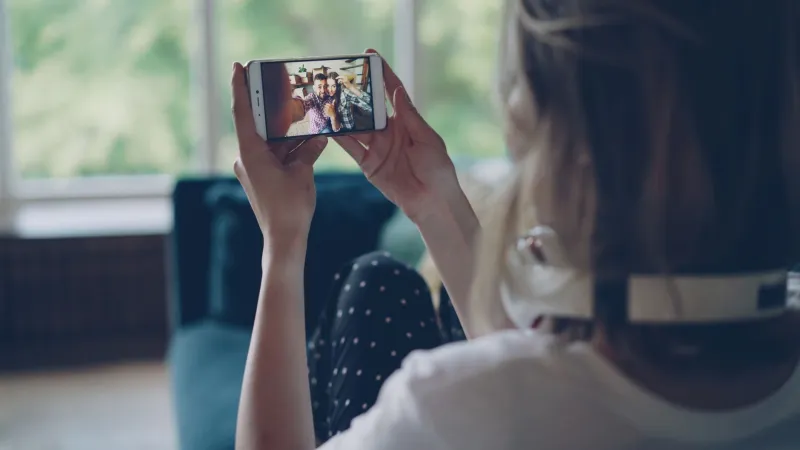
Why Gen Z Is Building Personal Joy Playlists (And Honestly, We Should All Be Taking Notes)
There's a certain kind of chaos that comes with being online in 2025. Infinite scroll, 47 open tabs, a TikTok For You Page that somehow knows you better than your therapist — the media landscape isn't just overwhelming, it's aggressively overwhelming. So how do you actually feel good in the middle of all that noise?
For a growing segment of Gen Z, the answer is surprisingly intentional: they're building what's become known as a dopamine menu.
Think of it like a personal restaurant menu, except instead of appetizers and entrées, you've got categories like "when I need a quick mood boost" or "Sunday morning slow-down vibes" or "I just had a terrible day and need to feel human again." Each entry — a specific playlist, a YouTube channel, a comfort show, a 10-minute walk ritual — is hand-selected to deliver a particular emotional payoff. No randomness. No algorithm deciding what you need. Just you, being deliberate about your own joy.
And yeah, it's kind of genius.
Where Did This Even Come From?
The term started picking up traction in mental health spaces, particularly on TikTok and Reddit, where therapists and wellness creators began adapting the concept from behavioral psychology. The idea borrows from something called behavioral activation — a therapeutic technique that encourages people to intentionally engage in activities linked to positive emotions, especially when depression or anxiety is making motivation scarce.
But Gen Z didn't just adopt the clinical framework. They remixed it.
Instead of a worksheet from a therapist's office, dopamine menus became aesthetic, shareable, and deeply personal. People started posting their menus as journal entries, Pinterest boards, and even Google Docs shared in Discord servers. The format spread because it felt like self-expression as much as self-care — which, for a generation that grew up posting their inner lives online, made total sense.
"It's not just about feeling better in the moment," says one 22-year-old content creator from Austin who goes by @softcoreoptimist on TikTok. "It's about actually knowing yourself well enough to know what you need. That's the real skill."
The Psychology Behind the Playlist
Here's where it gets interesting from a brain-science standpoint. Dopamine — the neurotransmitter most people associate with pleasure — doesn't actually spike when you experience something good. It spikes in anticipation of it. So when you know that putting on a specific lo-fi playlist or rewatching a particular episode of New Girl is going to make you feel better, just the act of reaching for that thing starts the feel-good process.
That anticipatory loop is exactly what a well-built dopamine menu is designed to exploit — in the best possible way.
Dr. Priya Mehta, a clinical psychologist based in New York who works primarily with young adults, explains it this way: "What we're seeing with this trend is essentially people learning to be their own mood regulators. They're identifying what works for them specifically, rather than relying on external sources to tell them what should make them happy. That's a significant shift, and a healthy one."
She also points out that the menu format itself is psychologically smart. "Having a pre-made list removes the decision fatigue that often happens when you're already depleted. You don't have to think — you just pick something from the menu."
What a Dopamine Menu Actually Looks Like
The beauty of this whole thing is that there's no universal template. One person's dopamine menu might be heavy on music — specific albums for specific states of mind, like Beyoncé's Renaissance for confidence, or Frank Ocean's Blonde for when you need to feel all your feelings. Another person's might center on physical activities: a 20-minute walk with a podcast, a stretch routine, cooking a specific comfort meal.
Some people organize theirs by intensity:
- Micro boosts (2–5 minutes): a funny video, a voice memo from a friend, a favorite meme account
- Mid-level resets (15–30 minutes): a comfort show episode, a short workout, journaling
- Full recharges (1+ hours): a movie marathon, a long phone call, a creative project
Others organize by emotional need — something for anxiety, something for loneliness, something for when you're bored but can't figure out why.
The specificity is part of what makes it work. "It's not just 'watch TV,'" says Marcus, a 25-year-old grad student in Chicago who started building his menu after a rough semester. "It's 'watch the specific episode of It's Always Sunny that makes me laugh every single time without fail.' That level of detail matters."
The Flip Side: Is This Just Glorified Avoidance?
Fair question. And it's worth asking, because there's a version of this that slides into something less healthy — using a curated comfort catalog to completely dodge difficult emotions rather than process them.
Dr. Mehta is clear on the distinction: "A dopamine menu should be a resource, not a refuge. The goal is to regulate your mood enough to function and feel okay — not to never sit with discomfort. If someone is using it to avoid every hard feeling indefinitely, that's worth examining."
Most people who've embraced the concept seem to get this intuitively. The menus aren't about numbing out — they're about having something reliable to reach for when the chaos gets to be too much, so you can come back to yourself and keep going.
How to Start Building Yours
If you're intrigued and want to try it, the entry point is simpler than you'd think. Start by paying attention. Over the next week or two, notice the specific things that genuinely shift your mood — not the things you think should make you happy, but the things that actually do. That distinction matters more than you'd expect.
Then organize them. You don't need a fancy system. A note on your phone works. A sticky note on your mirror works. The point is to have it accessible when you need it most — which is usually when you're least equipped to think clearly.
And update it regularly. Your emotional needs in January aren't the same as they are in July. Your dopamine menu should evolve as you do.
The Bigger Picture
What's really happening with this trend goes beyond self-care aesthetics. It's a generation actively pushing back against the passive consumption model that most of the internet is built on — the idea that algorithms should decide what you need, that more content is always better, that you should just keep scrolling until something sticks.
Building a dopamine menu is an act of curation in the truest sense. It's saying: I know what works for me, and I'm going to choose it on purpose.
In a media landscape that profits from your confusion and exhaustion, that's not just a wellness hack. It's a quiet kind of resistance. And honestly? Vohvis is here for it.