Forty Dollars a Month to Watch the Same Six Episodes: Inside the Comfort Rewatch Economy

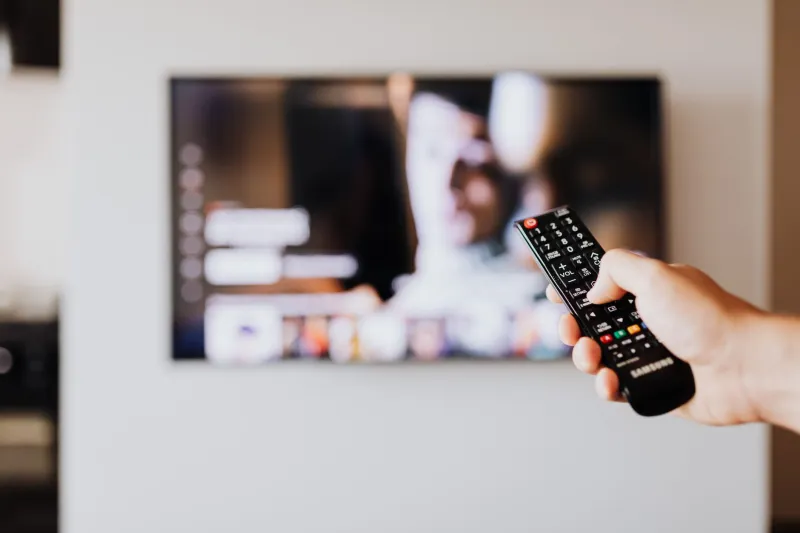
Somewhere between your third Peacock subscription renewal and your fourteenth run through The Office, something worth paying attention to happened. You stopped watching TV to be entertained and started watching it to feel okay.
Welcome to the comfort rewatch economy — a quietly massive cultural phenomenon where millions of Americans are spending real money, month after month, to access content they could practically recite from memory. It's not nostalgia in the classic sense. It's something newer, stranger, and honestly a little more revealing about where we are right now.
The Math Nobody Wants to Do
Let's be honest for a second. The average US household with multiple streaming subscriptions is spending somewhere between $60 and $100 a month on content access. That's roughly $1,200 a year. And if you've ever genuinely audited what you actually watched versus what you meant to watch, the breakdown gets uncomfortable fast.
A significant chunk of that viewing time isn't going toward new releases or critically acclaimed limited series. It's going toward Friends. It's going toward Parks and Rec. It's going toward whatever comfort food show lives rent-free in your brain and has for the past decade. The streaming platforms know this. They've known it for a while. It's part of why licensing deals for legacy sitcoms have reached genuinely absurd dollar amounts — HBO Max reportedly paid around $425 million for Friends rights before eventually losing them to Netflix. That wasn't a charity move. It was a calculated bet on the comfort rewatch audience.
And that audience showed up.
Why Unlimited Choice Broke Our Brains
Here's the paradox that nobody really talks about: the more content that exists, the less most people want to engage with something new. Psychologists call this decision fatigue. The rest of us call it staring at a home screen for 25 minutes before giving up and putting on Brooklyn Nine-Nine again.
When you have access to tens of thousands of hours of content, choosing what to watch becomes its own form of cognitive labor. Every new show requires investment — attention, emotional openness, the willingness to sit with unfamiliar characters and storylines. Comfort rewatches ask nothing of you. You already know the beats. You know when to laugh, when to look away, when the good part is coming. That predictability isn't a bug. For a lot of people right now, it's the entire point.
There's actual neuroscience backing this up. Familiar media activates reward pathways without triggering the uncertainty response that new content can provoke. Your brain essentially gets a hit of dopamine without having to do the work of processing novelty. In a cultural moment defined by constant uncertainty — economic pressure, social media chaos, a news cycle that never actually ends — that trade-off is incredibly appealing.
Comfort Watching as Emotional Infrastructure
Call it what it is: a lot of people are using their favorite shows as emotional regulation tools. Not in a pathological way, but in the same way someone might have a playlist they return to when things feel heavy, or a specific meal that signals safety and home.
The shows people cycle back to most tend to share certain qualities. They're often episodic rather than serialized, meaning you can drop in anywhere without losing the thread. They feature ensembles with clear, consistent personalities. The conflict is usually low-stakes enough that resolution feels guaranteed. And they're almost always funny — not sharp or challenging, but warm. The kind of humor that doesn't ask you to think, just to feel a little lighter.
Schitt's Creek, New Girl, Gilmore Girls, The Great British Bake Off — these aren't just popular shows. They're functional objects. People reach for them the way they reach for a weighted blanket.
And the industry has started designing around this behavior rather than fighting it. You'll notice that the most aggressively licensed and re-licensed content tends to fit this mold. Platforms aren't just chasing prestige — they're chasing the shows that people will put on in the background at 11pm on a Tuesday when they need to feel like things are going to be fine.
The Subscription Stacking Problem Nobody's Solving
Here's where it gets a little thorny. The comfort rewatch economy has become a genuine financial trap for a lot of households. Shows move between platforms constantly, which means your comfort watch might live on Netflix one year, migrate to Peacock, pop up on Max, and then disappear entirely for six months. Keeping up with where your specific shows live requires either constant platform-hopping or just... subscribing to everything.
That's not an accident. The fragmentation of streaming rights is partly a business strategy designed to maximize subscription revenue by ensuring no single platform can satisfy every viewer's comfort library. You need three services to feel settled. So you pay for three services.
The result is a generation of viewers who are spending more on streaming than previous generations spent on cable — except cable at least had the decency to bundle everything in one place. Now you're paying à la carte prices for a curated comfort experience that requires four different apps and a spreadsheet to manage.
What This Says About Us
It would be easy to frame comfort rewatching as a failure of imagination or a symptom of cultural stagnation. But that reading misses something important. The fact that people are willing to spend actual money, repeatedly, to access the same emotional experience says something genuine about what we're all navigating.
We're living in a high-stimulation, high-anxiety, constantly-updating world where novelty is everywhere and groundedness is hard to find. Returning to a show you love isn't escapism in the checked-out sense — it's a form of self-regulation. It's choosing something that you know will deliver, in a landscape where almost nothing is guaranteed to deliver.
There's also something worth honoring in the fact that certain stories have genuinely earned that kind of loyalty. The shows people rewatch most aren't random. They got there because they did something right — created characters that felt like people, built worlds that felt livable, told stories that made the audience feel seen. That's not nothing. That's actually the whole point of storytelling.
The Vibe of It All
At the end of the day, the comfort rewatch economy is a market response to a real human need. People need anchors. They need things that feel familiar and safe and guaranteed. And if the entertainment industry has figured out how to monetize that need — sometimes aggressively, sometimes cynically — it doesn't change the fact that the need itself is legitimate.
You're not broken for watching The Office for the fourteenth time. You're not failing at being a cultural consumer. You're just a person who found something that makes you feel better, and you keep going back to it.
The only question worth asking is whether the price tag is actually worth it to you — or whether the platforms have gotten very good at charging you for the emotional equivalent of coming home.