Someone Is Watching a Stranger Fold Laundry Right Now — and They're Paying For It
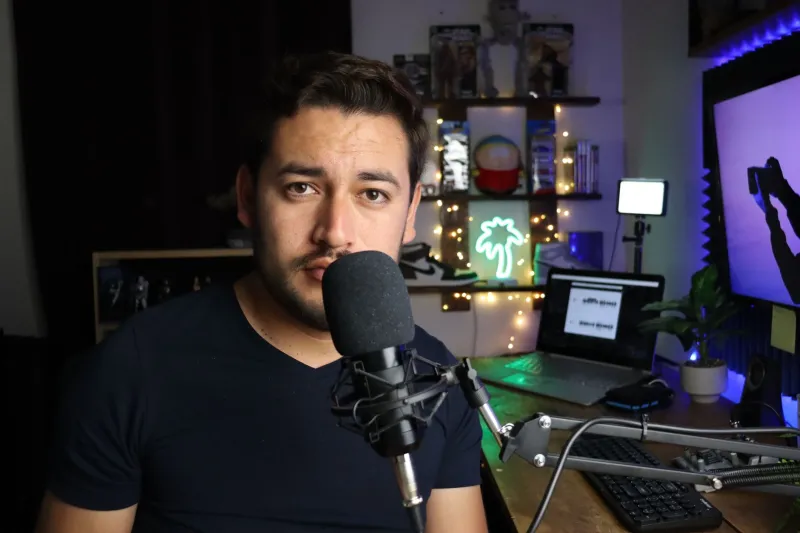
Open Twitch on any given Tuesday afternoon and you'll find someone — probably with a ring light, probably with a lo-fi playlist running softly in the background — doing their dishes. Not talking about their dishes. Not reviewing dish soap. Just... washing dishes. And somewhere between five hundred and five thousand people are watching.
Welcome to ambient content, the genre that technically has no genre. It's streams and videos where creators cook dinner, tidy their apartments, grind through video games without commentary, or simply sit at their desks and exist. No tutorial. No punchline. No dramatic arc. Just another person moving through their day while you move through yours — except you're watching them, and sometimes you're paying a monthly subscription for the front-row seat.
It sounds bizarre until you realize you've probably already done a version of it.
The Background Companion You Didn't Know You Needed
For a long time, we called this "background noise." You'd throw on a Netflix show you'd already seen twelve times while cooking dinner, not because you needed to watch it, but because the sound of other humans talking made the apartment feel less empty. That instinct didn't go away. It evolved.
Ambient content creators are essentially the upgraded, personalized version of that experience. The difference is that they're live, or they feel live. They respond to chat. They notice when you drop a comment. They say your username out loud when you subscribe. That one moment — that tiny acknowledgment — does something to the brain that a rerun of The Office simply cannot replicate.
This is the parasocial relationship in its most distilled form. You're not there for information. You're not there for laughs, necessarily. You're there because someone is home, and they let you in.
Why "Nothing Happening" Is Actually the Point
Here's what's counterintuitive about ambient content: the lack of stimulation is a feature. In a media landscape that's been weaponized for maximum engagement — autoplay, push notifications, algorithmically perfected dopamine loops — a stream where someone quietly reads a book is almost radical in its calmness.
Creators who specialize in this space often talk about the "study with me" format, where they sit at a desk, maybe sip coffee, maybe flip through notes, and just... model the act of being productive and present. Millions of people use these videos to feel less alone while they work from home. It's not background noise. It's simulated company.
And it works. There's actual research suggesting that ambient social presence — even one-directional — can reduce feelings of isolation. Your nervous system doesn't always distinguish between a friend sitting across from you at a coffee shop and a creator on a screen doing roughly the same thing. The warmth registers either way.
The Part Where Money Gets Involved
Here's where it gets interesting from a cultural standpoint: people aren't just watching this content for free on YouTube. They're subscribing on Twitch, joining Patreon tiers, sending tips through Ko-fi, buying channel memberships. They're paying, sometimes $5 to $25 a month, to watch someone exist.
And before you judge that — think about what else $15 a month buys. A streaming subscription that algorithmically serves you content you didn't ask for. A gym membership you use twice. A meditation app you open when you're already too anxious to meditate.
For a lot of people, a monthly subscription to a creator whose presence genuinely makes them feel better is a reasonable transaction. The value isn't in the content. It's in the consistency. Knowing that at 7 p.m. on Wednesdays, someone will be there — that's the product.
Loneliness Is the Market
Let's be honest about what's actually being sold here, because the creators who are doing this well are honest about it too. The United States is in the middle of a loneliness epidemic that predates the pandemic but got significantly worse because of it. The Surgeon General literally issued an advisory about it. Something like half of American adults report measurable feelings of loneliness on a regular basis.
Ambient content is one of the ways people are quietly self-medicating. It doesn't require vulnerability. It doesn't require scheduling. It doesn't require the exhausting social labor of maintaining a reciprocal friendship. You just show up, lurk in a chat, and absorb the low-level warmth of someone else's company.
That's not pathetic. That's adaptive. Humans are wired for connection, and when the conventional channels for that connection are unavailable — because you moved to a new city, because you work remotely, because you're introverted, because you're grieving, because you're just tired — you find other channels.
Ambient creators have become one of those channels, and the audience paying for it isn't delusional about the relationship being one-directional. Most of them know. They're choosing it anyway, because it's better than the alternative.
What This Means for the Creator Economy
For a while, the advice to aspiring creators was relentlessly about value delivery. Be educational. Be entertaining. Teach something. Make people laugh. Give them a reason to click. Ambient content kind of blows that playbook up.
The creators thriving in this space aren't necessarily the funniest or the most talented. They're the most consistent and the most present. Their superpower is showing up. Their audience isn't asking for a performance — they're asking for a person.
That's a genuinely different skill set, and it's reshaping what success looks like on platforms like Twitch and YouTube. Follower counts matter less than community density. Viral moments matter less than daily rituals. The question isn't "will this clip get shared?" It's "will people miss me if I don't stream today?"
Some of the biggest ambient creators have communities that function more like neighborhoods than fan bases. People know each other in the chat. Inside jokes accumulate over months. There's a social ecosystem built around someone who is, technically, just doing their laundry.
The Vibe Is the Content
Maybe the most honest way to think about ambient content is this: we've always consumed media to regulate our emotional state. You put on a sad playlist when you want to feel your feelings. You watch a comedy special when you need to decompress. You throw on a familiar show when you want to feel safe.
Ambient content is just that logic applied to companionship. You tune in when you want to feel less alone. The creator doesn't have to do anything extraordinary. They just have to be there.
And in a world that increasingly struggles to offer that — genuine, low-stakes, non-demanding presence — it turns out that's worth something. Sometimes it's worth $5 a month. Sometimes it's worth a lot more.
Somebody is watching a stranger fold laundry right now. And honestly? They're probably having a better evening than you'd expect.